
Milk supplies could improve with the monsoon, provided the rains are not excessive.

Prime Minister Narendra Modi unveiled development projects worth Rs 15,000 crore in West Bengal on Saturday. The prime minister unveiled the projects at an official function in Krishnanagar in Nadia district. Addressing the programme, he said these initiatives were aimed at making West Bengal a developed state.

Prime Minister Narendra Modi on Friday apologised to Chhatrapati Shivaji Maharaj and those hurt by the collapse of the warrior king's statue in Maharashtra's Sindhudurg district, an act coming in the backdrop of a huge row over the crash which provided ammunition to the opposition to target the Mahayuti government ahead of assembly polls.
Rising energy demand could tilt India's energy basket towards fossil fuels from coal to oil, natural gas.

While emerging economies present the best chances for economic growth, not all countries will prosper at the same rate.
Wisner said during a discussion organised by Asia Society here yesterday on the Indian elections.

'I hope the trend is sustainable and that economic activity accelerates going forward.'

National Stock Exchange (NSE) chief Ashishkumar Chauhan on Friday cautioned retail investors against trading in derivatives and suggested them to invest in equities through mutual fund route. He emphasized that trading in Futures & Options (F&O) derivatives should be limited to informed investors who can manage risk and comprehend the market. Recently, Finance Minister Nirmala Sitharaman and chief economic advisor V Anantha Nageswaran flagged the growing risk of F&O trading for retail investors.

Chief economist at State Bank of India has revised downward the full-year growth forecast to a low 6.8 per cent from 7.5 per cent earlier for FY2023, citing "the way below GDP numbers for the first quarter". The National Statistical Office on Wednesday released the Q1 growth numbers which showed a consensus growth of 13.5 per cent, pulled down by the poor show of the manufacturing sector, which reported a paltry 4.8 per cent expansion in the first three months of FY23, negating the robust show by the services sector. Consensus forecast was 15-16.7 per cent of which the RBI made the highest forecast of 16.7 per cent.
'Is the Agniveer scheme or their post-retirement re-employment in paramilitary forces or in the state governments the BJP's answer to the crying need on the job front?' 'Or, even Finance Minister Sitharaman's one-year internship scheme in the public and private sector, is it a permanent solution, either?', asks N Sathiya Moorthy.

Economies of Punjab, Andhra Pradesh, Madhya Pradesh, Uttarakhand and Haryana may have grown at a slower pace than the national economy during 2022-2023.

'Don't be surprised if the Census forms come with a caste box.' 'I will be surprised if it doesn't. It will be a point conceded to Rahul Gandhi and his allies,' asserts Shekhar Gupta. The BJP machine could take all 3 in its stride, but this election has changed that, notes Shekhar Gupta.

Sources within the Congress, including those who have been members of the teams that drafted its 2019 and 2024 Lok Sabha poll manifestos, said the Karnataka government decision lacked any empirical basis.

'Clearly, the next few months will be very challenging for industry.' 'We are clearly in a phase where recovery is a dream.'

Among possible new members, former chief economic advisor Arvind Virmani's name is doing the rounds.
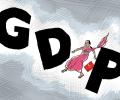
India's Gross Domestic Product (GDP) is expected to expand by 9.2 per cent in the current financial year, according to the Economic Survey 2021-22 tabled in the parliament on Monday. "Advance estimates suggest that the Indian economy is expected to witness real GDP expansion of 9.2 per cent in 2021-22 after contracting in 2020-21. "This implies that overall economic activity has recovered past the pre-pandemic levels," Economic Survey noted. Almost all indicators show that the economic impact of the "second wave" in Q1 was much smaller than that experienced during the full lockdown phase in 2020-21 even though the health impact was more severe, it said.

'Two consecutive quarters of negative growth are the technical definition of an economic recession, and for the first time in this generation's memory, we may be staring at one,' observes Aakar Patel.

Measures that quickly boost demand and increase employment are needed to push up growth. Moreover, without announcing new planss, the government should strengthen schemes such as PM KISAN, MNREGA and programmes to build rural roads.

National Aeronautics and Space Administration will soon provide advanced training to Indian astronauts, with the goal of mounting a joint effort to the International Space Station, a top American diplomat said Friday.

China's debt is dangerously high at close to three times its GDP, with the ratio having nearly doubled in recent years, observes T N Ninan.

India's economic growth surged to 20.1 per cent in the April-June quarter of this fiscal, helped by a low base of the year-ago period, despite a devastating second wave of COVID-19. The gross domestic product (GDP) had contracted by 24.4 per cent in the corresponding April-June quarter of 2020-21, according to data released by the National Statistical Office (NSO) on Tuesday. The government had imposed a nationwide lockdown at the onset of the COVID-19 pandemic last year.

The Bharatiya Janata Party and its allies on Tuesday welcomed the Union Budget and said it focussed on youth, farmers, women, and has 'substantial allocations' for Maharashtra, but the opposition slammed the annual financial statement, claiming it neglected the western state and only seeks to please the saffron outfit's partners in Bihar and Andhra Pradesh.

Domestic institutional investors pumped Rs 2.3 trillion into equities during H1 CY24. Of this, mutual funds contributed 80%.

Pragmatism and flexibility is a virtue. An untethered and short-term approach to policymaking is a flaw, argues Mihir S Sharma.

US's terrible political and economic leadership will ultimately cost the dollar its value. India must act early to avoid being dragged down, suggests R Jagannathan.
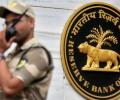
The Reserve Bank of India on Wednesday retained the economic growth projection for the current financial year at 10.5 per cent, while cautioning that the recent surge in COVID-19 infections has created uncertainty over the economic growth recovery. In its last policy review, the RBI had projected a GDP growth rate of 10.5 pc for FY'22. Taking various factors into consideration, it said, "the projection of real GDP growth for 2021-22 is retained at 10.5 per cent consisting of 26.2 per cent in Q1, 8.3 per cent in Q2, 5.4 per cent in Q3 and 6.2 per cent in Q4."

'Nirmalaji must consider herself a very lucky finance minister, partly because of the government's response to covid and partly because we as a nation have done very well as an economy, post pandemic.'

'There has been a huge shift. Consumer needs and requirements have changed, and differ from city to city.'

Six decades and more later, we are now captives of our identities. Every poll is based on elaborate calculations of electability of candidates on the basis of their castes and other narrow definers. That, along with voter promiscuity, is what defines our political culture, which remains stubbornly resistant to any change, asserts Shreekant Sambrani.

India has helped the world discover the true potential of democracy and the keyword for the country today is compassion for the downtrodden, needy and those on the margins, President Droupadi Murmu said on Sunday.

The Reserve Bank on Friday retained the GDP forecast for the current financial year at 9.5 per cent and flagged global semiconductor shortages, elevated commodity prices and potential global financial market volatility as downside risks to economic growth. In his address after the three-day meeting of the rate-setting panel, RBI Governor Shaktikanta Das said recovery in aggregate demand gathered pace in August-September, and it is reflected in high-frequency indicators, like railway freight traffic; port cargo; cement production; electricity demand; e-way bills; GST and toll collections. "The ebbing of infections, together with improving consumer confidence, has been supporting private consumption," he said, and added the pent-up demand and the festival season should give further fillip to urban demand in the second half of the financial year.

In her Budget speech, Finance Minister Nirmala Sitharaman on Tuesday underlined the need for collaboration between the Centre and states to take up the next-generation reforms covering land, labour, capital and entrepreneurship. As far as revenue share goes, the government has projected to give about 32.5 per cent of central taxes to states during FY25, against the 15th Finance Commission's recommendation of 41 per cent, according to the Union Budget estimate.
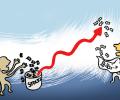
In a dazzling resurgence, foreign investors have graced the Indian equity markets with an influx of nearly Rs 1.5 lakh crore in 2023, fuelled by optimism over the country's resilient economic fundamentals amid shadows of a gloomy global scenario. Experts believe that the positive trend may continue in 2024. This follows Indian equities witnessing the worst-ever net outflow of Rs 1.21 lakh crore by FPIs in 2022 on aggressive rate hikes by the central banks globally after net inflows for three consecutive years.
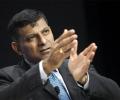
Former RBI governor Raghuram Rajan on Monday said the central bank will have to raise interest rates to tame inflation and the hikes need not be considered by politicians and bureaucrats as some "anti-national" activity. Known for his frank views, Rajan also said it was important to remember that the "war against inflation" is never over. "Inflation is up in India. At some point, the RBI will have to raise rates, like the rest of the world is doing," he said in a LinkedIn post.
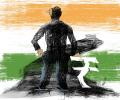
Fitch Ratings on Thursday said the resurgence of COVID-19 infections may delay India's economic recovery, but won't derail it, as it kept the sovereign rating unchanged at 'BBB-' with a negative outlook. It projected a 12.8 per cent recovery in GDP in the fiscal year ending March 2022 (FY22), moderating to 5.8 per cent in FY23, from an estimated contraction of 7.5 per cent in 2020-21. Fitch had in June last year revised outlook for India to 'negative' from 'stable' on grounds that the coronavirus pandemic had significantly weakened the country's growth outlook and exposed the challenges associated with a high public debt burden.

The finance minister's assertion that industry should not expect any spectacular announcements in the 2024 interim Budget suggest that the electoral imperatives of more tax concessions or higher expenditure on welfarist programmes could be far less pronounced than they were before the 2019 interim Budget, expects A K Bhattacharya.

Moody's Analytics said that the reduced political stability and the need for consensus building that is inherent with a coalition government, might erode investor confidence in the near term.

India may have to lean more on West Asian nations for supplies of liquefied petroleum gas (LPG), a cooking fuel, in the coming years after Indian state-run refiners drew up big plans to diversify into producing more profitable petrochemicals. This shift leads to reduced LPG output, Indian refining executives said. The mantra for state-run oil companies, from Indian Oil Corporation (IndianOil) to liquefied natural gas (LNG) importer Petronet LNG, which are looking to diversify their businesses from lower-margin fuels, has been value-added petrochemicals.
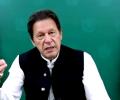
Pakistan Prime Minister Imran Khan on Friday launched the country's first-ever national security policy, which articulates a citizen-centric framework, placing economic security at its core unlike the previous one-dimensional security policy where the focus was on the military.

The Survey adopts an unfettered approach in thinking about the appropriate economic model for India. This endeavour is reflected in the sky blue cover of the Survey, Chief Economic Adviser Krishnamurthy V Subramanian said.
 © 2026 Rediff.com - Advertise with us - Disclaimer - Privacy Policy - Sitemap - Feedback - About us - Terms of use - Grievances